



The Panará
The tribe that hides from man, as they were known, were a feared community among neighboring Indian groups. However, they almost became extinct when the Cuiabá-Santarém highway, (the BR-163) cut through the very heart of their territory in the early 1970’s. With little or no resistance to the diseases that the road carried into the area, the Panará’s numbers fell from an estimated 800 to just 80 in three years. The survivors remember this period in their history as “the time everyone died”. In February 1975, the remaining members of the community were relocated to the Xingu National Park, some 250 miles away. After moving nine times within the Park in an effort to find an environment similar to their native forest, the Panará sought assistance in their efforts to reclaim the land from which they were removed in an attempt to secure their cultural heritage.
When they saw an airplane for the first time, over flying the Sonsênasan village in 1967, the Panará called it the pakyã'akriti, or "the phony falling star." They rushed to their bows and shot the intruder, but no hits were scored. Inside the plane, frontiersman Cláudio Villas Bôas ducked instinctively when he saw the arrows flying by. He was looking for the "giant Indians" to pacify them before contact was made with the whites in the Peixoto de Azevedo river. He found them at last. But he was anguished. The arrows crisscrossed the sky and fell to the ground. Despite all his heart in avoiding the worst, he knew he was the herald of a fate impregnable to the warriors' aim. Just as a falling star, the airplane came into the Panará lives as an omen - to change it.
It was another five years before the Villas Bôas brother finally could approach the aloof Panará, on February 4, 1973, because the Indians set up and broke camp and always fled from contact. However, before this historical contact, before the Cuiabá-Santarém road was bulldozed over them, sporadic contacts with the highway white worker's viruses struck the Panará. In two years, so many died from the flu and diarrhea that the group almost disappeared: "We were in our village - chieftain Akè Panará recalls - and everybody began to die. Others went deep into the woods, and more died. We were sick and weak, and couldn't bury our dead. They rotted on the ground. The buzzards ate them all."
Because of the tragedy, one great big phony falling star flown by Brazilian Air Force officers airlifted the survivors from the Peixoto de Azevedo river to the Xingu Indigenous Park, 250 km westward. Within two years, the Panará were decimated, de-structured and evicted. Within one hour, they were flown into another world. In Xingu, they lived as ghosts, roaming the country. They shifted village sites seven times, seeking a place similar to their original territory. It was much worse than an exile.
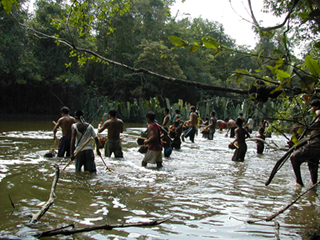
Twenty years after that memorable trip, they returned. They traveled to the Peixoto de Azevedo river, they flew in the star and they found a good omen from the skies: a pristine chunk of their land, still covered with forests, preserved from prospectors, squatters, loggers and cattle. A pretty good chunk. They moved back, set up camp and built a new village. They filed suits in court, and convinced the National Foundation for the Indian to support them. And finally they got their land back. The "miracle victims" became "subjects of history." This is the true story of the giant Indians - the story of a giant heart.
The Panará's Final Court Victory
On August 22 2001, after seven years, the decision to pay the Panará damages resulting from unsupervised contact with outside society was made final. The sentence issued by the 3rd panel of the Federal Court of Appeals of 1st Region is the first time that the Brazilian State has been made to indemnify an Indigenous people for pain and suffering. It was a historic decision recognizing the responsibility of the State and reaffirming the recognition of Indigenous rights consecrated by the Federal Constitution.
The tribe that hides from man, as they were known, were a feared community among neighboring Indian groups. However, they almost became extinct when the Cuiabá-Santarém highway, (the BR-163) cut through the very heart of their territory in the early 1970’s. With little or no resistance to the diseases that the road carried into the area, the Panará’s numbers fell from an estimated 800 to just 80 in three years. The survivors remember this period in their history as “the time everyone died”. In February 1975, the remaining members of the community were relocated to the Xingu National Park, some 250 miles away. After moving nine times within the Park in an effort to find an environment similar to their native forest, the Panará sought assistance in their efforts to reclaim the land from which they were removed in an attempt to secure their cultural heritage.
When they saw an airplane for the first time, over flying the Sonsênasan village in 1967, the Panará called it the pakyã'akriti, or "the phony falling star." They rushed to their bows and shot the intruder, but no hits were scored. Inside the plane, frontiersman Cláudio Villas Bôas ducked instinctively when he saw the arrows flying by. He was looking for the "giant Indians" to pacify them before contact was made with the whites in the Peixoto de Azevedo river. He found them at last. But he was anguished. The arrows crisscrossed the sky and fell to the ground. Despite all his heart in avoiding the worst, he knew he was the herald of a fate impregnable to the warriors' aim. Just as a falling star, the airplane came into the Panará lives as an omen - to change it.
|
It was another five years before the Villas Bôas brother finally could approach the aloof Panará, on February 4, 1973, because the Indians set up and broke camp and always fled from contact. However, before this historical contact, before the Cuiabá-Santarém road was bulldozed over them, sporadic contacts with the highway white worker's viruses struck the Panará. In two years, so many died from the flu and diarrhea that the group almost disappeared: "We were in our village - chieftain Akè Panará recalls - and everybody began to die. Others went deep into the woods, and more died. We were sick and weak, and couldn't bury our dead. They rotted on the ground. The buzzards ate them all."
Because of the tragedy, one great big phony falling star flown by Brazilian Air Force officers airlifted the survivors from the Peixoto de Azevedo river to the Xingu Indigenous Park, 250 km westward. Within two years, the Panará were decimated, de-structured and evicted. Within one hour, they were flown into another world. In Xingu, they lived as ghosts, roaming the country. They shifted village sites seven times, seeking a place similar to their original territory. It was much worse than an exile.
Twenty years after that memorable trip, they returned. They traveled to the Peixoto de Azevedo river, they flew in the star and they found a good omen from the skies: a pristine chunk of their land, still covered with forests, preserved from prospectors, squatters, loggers and cattle. A pretty good chunk. They moved back, set up camp and built a new village. They filed suits in court, and convinced the National Foundation for the Indian to support them. And finally they got their land back. The "miracle victims" became "subjects of history." This is the true story of the giant Indians - the story of a giant heart.
The Panará's Final Court Victory
On August 22 2001, after seven years, the decision to pay the Panará damages resulting from unsupervised contact with outside society was made final. The sentence issued by the 3rd panel of the Federal Court of Appeals of 1st Region is the first time that the Brazilian State has been made to indemnify an Indigenous people for pain and suffering. It was a historic decision recognizing the responsibility of the State and reaffirming the recognition of Indigenous rights consecrated by the Federal Constitution.
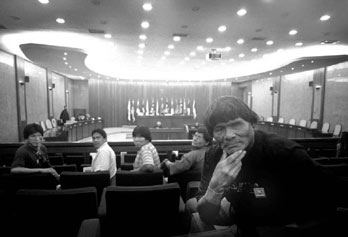
Compensation was fixed at four thousand minimum wages, for moral damages (suffering, humiliation, terror) and material damages (deaths) suffered by the Panará people resulting from the actions of the Brazilian State during the process of contact in the early 1970’s.

Brazilian Projects
Territorial Control and Legal Action by the Panará Indians’.
Legal support and Capacity Building for Indigenous Peoples in Roraima
Socio-Environmental Legislation and Law Program
Our Projects
Colombia
Ecuador
Guyana
Suriname
Donate